Alexander Hamilton Quotes
As to religion a moderate stock will satisfy me. She must believe in god and hate a saint.
Hamilton, Alexander. "From Alexander Hamilton to John Laurens, [April 1779]." The Papers of Alexander Hamilton, vol. 2, edited by Harold C. Syrett, Columbia UP, 1961, p. 36.


Einstein’s religious views were very sophisticated and unusual. He was a deist—a believer in God. He was of Jewish background and like some Protestant sects, Jews can interpret scripture and the nature of God as individuals. They need not follow a particular doctrine. However Einstein had a very complex vision of God—as he described it, the “God of Spinoza”—a 17th century Rabbi and Philosopher whose views were so radical that his books were banned and he was excommunicated by the Rabbis of Holland, a rarity in Judaism. This view of God is not the human-related form but a view of God as an abstraction everpresent and a prime mover inherent in nature, the world and in humanity.


When the priest died, 3 handwritten manuscripts were found written and signed by him in which he attacked religion in general and the church and the Bible in particular. His Testament was read by Voltaire and Denis Diderot among others and he was very influential in their development as opponents of organized religion. This quotation has been one of the bases of secular humanism which would then develop after he had died.
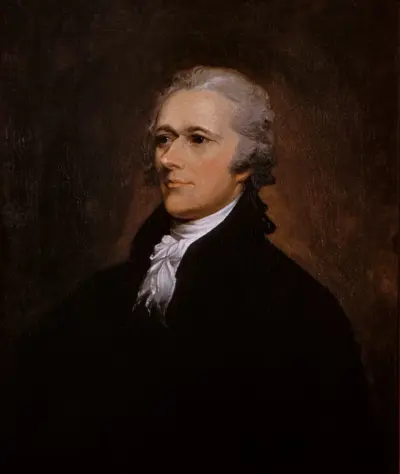
Alexander Hamilton was an American statesman, politician, legal scholar, military commander, lawyer, banker, and economist. He was one of the Founding Fathers of the United States. He was an influential interpreter and promoter of the U.S. Constitution, as well as the founder of the nation's financial system, the Federalist Party, the United States Coast Guard, and the New York Post newspaper. As the first secretary of the treasury, Hamilton was the main author of the economic policies of George Washington's administration. He took the lead in the federal government's funding of the states' debts, as well as establishing the nation's first two de facto central banks, the Bank of North America and the First Bank of the United States, a system of tariffs, and friendly trade relations with Britain. His vision included a strong central government led by a vigorous executive branch, a strong commercial economy, government-controlled banks, support for manufacturing, and a strong military.
