Paul Johnson Quotes
As the CIA and KGB, like God and Satan, fight Miltonic battles across five continents.
Johnson, Paul. Modern Times: The World from the Twenties to the Eighties. Harper & Row, 1983, p. 611.


Actually the United States has a long history in interfering with foreign elections throughtout Latin American Countries, Europe, Asia,, and Africa. Russia also has been trying to tilt elections recently in Eastern Europe and befroe the COld War the International Communist Party was involved trying to swing elections since shortly after the Russin Revolution. Before that the Czars agents were involved in many foreign elections. But the United States and Russia historically are relative newcomers and rank amateurs in interering with foireign elections when compared with Germany and France and the Champion--Great Britain who controlled much of the world and very often promoting democratic values like elections throughtout the world and then workign to manipulate those elections. Japan and Chine did much less of this historically. Instead they just conquored other counties and placed their puppets in charge. What was new in teh 2016 Russian interference in the American Election was the fact that it was done by hacking computers. Putin had accused Hillary Clinton of Interfering with the Russian election when he last ran for President by funing Russian organziations that oppo

Mohammad Mosaddegh had been elected Prime Minister of Iraq. However, he was left leaning in the midst of the Cold War and some of our policy strategists thought that he could hurt the U. S. interests which were large there. Iran had huge oil reserves and American and British companies were active in operating the oil drilling and export. The new Prime Minister was threatening the British with oil nationalization to get a larger share of the oil revenue. The Shah, with CIA support, fired Mosaddegh, but that backfired and the Shah had to flee the country. This was when Smith sent this note to President Eisenhower. We were prepared to try and work with Mosaddegh. However, our chief ally did not agree and wanted to oust Mosaddegh. At the request of the British MI6 intelligence service, the CIA implemented a “spontaneous” coup d’etat to overthrow the popularly elected Iranian President Mohammad Mosaddegh. This enabled the Shah to return and take over. Ironically, although he was anti-Communist, he threatened the American and British Oil Companies and forced them to “renegotiate” their contracts with Iran and pay the Shah more money. The Shah was very unpopular with Iranians, and over the years the Iranians who opposed the Shah, blamed the United States for the fact that Mosaddegh had been overthrown and the Shah returned to power. See {637008} and {637007}.

Responding to suggestions that with the demise of the Berlin Wall the spying business will come to a halt: John Moore Cornwell

Commenting on a former CIA agent's defection to Russia:


This was a critical shortcoming in that the NSA had the personnel for electronic intelligence. It was the major job of the CIA to place human agents—abroad—who could act as spies and/or recruit or manage spies.
He was not referring to economic corruption but intellectual and moral corruption. Regan who appointed many excellent key officials picked a very unfortunate choice to lead the CIA. William J. Casey had many faults and weaknesses—See {637472}, {636743} and {637469}. But the worst of his damage was imposing his ideology on the agency and having the intelligence analysts shape their intellectual product to conform with a particular world, political, and religious view. See {634408}. This became acceptable and as future administrations took power their ideologies were considered by the CIA professionals and reports were edited and shaped accordingly. Reform was instituted by some of the future CIA directors but there were precedents from the Casey days for years. One particularly bad manifestation of this intellectual corruption occurred when Vice President Richard Cheney imposed a neocon world view on the agency with a pliant CIA director and the agency gave the President a totally inaccurate assessment of Iraq nuclear capability and intention which triggered the disastrous Iraq war, made all the worse when there were not only no nuclear weapons in Iraq as had been reported, but there was not even a single laboratory trying to develop nuclear weapons or even nuclear power.


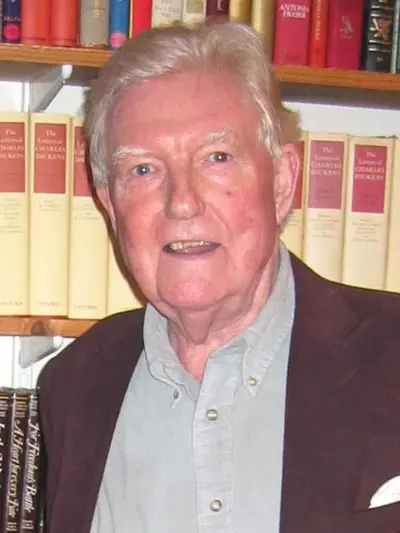
Paul Bede Johnson CBE is an English journalist, popular historian, speechwriter, and author. Although associated with the political left in his early career, he is now a conservative popular historian.
