Richard Cordray Quotes
As Ohio Solicitor General and in pro bono private practice, I defended Ohio's hate crimes law. This included a brief in the Wisconsin v. Mitchell case where the U.S. Supreme Court upheld Wisconsin's hate crime law that included sexual orientation. Ohio's should include it as well, and we support it.
Cordray, Richard. "Statement on LGBTQ Rights." Cordray for Ohio, 2018.


The case was Shelley v. Kraemer where the Supreme Court outlawed discriminatory restrictive covenants A restrictive covenant was a condition that was written into the deed on a piece of property. Even if the owner of the home did not want to discriminate, the previous owners who wrote the restrictive covenant into the deed (or his relatives and heirs) could sue and invalidate the sale. In many cases, insurance would not sell title insurance or banks would not give mortgages for a Black or a Jew where there was a covenant in the deed, even if the covenant was more than 100 years old. Homeowner associations would also enforce the covenants which were originally written into all the deeds of the development. Once the supreme court ruled that restrictive covenants were unconstitutional, no court would enforce any of these lawsuits. It was one of the fastest steps forward in the history of Civil Rights since the day after the court decision racists could no longer enforce the covenants that were in tens of millions of deeds in America.


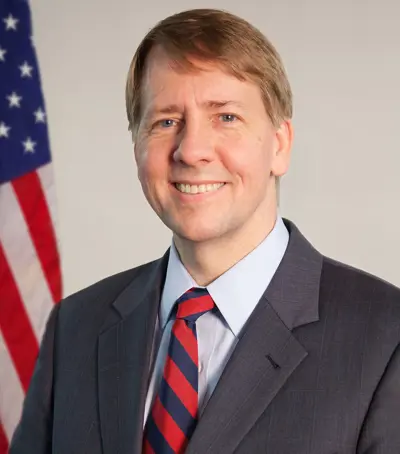
Richard Adams Cordray is an American lawyer and politician who served as the first Director of the Consumer Financial Protection Bureau (CFPB) from 2012 to 2017. Prior to his appointment, Cordray variously served as Ohio's Attorney General, Solicitor General, and Treasurer. He was the Democratic nominee for Governor of Ohio in 2018.
