James G. Stavridis Quotes
As cyberweapons and cyberattacks increase in scale and intensity, it will be difficult to defend against them all.
Stavridis, James G. "How the U.S. Should Respond to Russian Hacking." Bloomberg Opinion, 2016.


There is a constant race between the developers of hacking and cyberattack software and the developers of security and protective software.


Many people not only disagreed with him but thought is analogy was also wrong. Most of the nations in the world do not have a navy. The few that do, have never claimed that the navy was deployed for civilian purposes. They did so to protect their merchant ships, prevent blockades and to project power—all military activities. Critics observe that few nations would risk a situation where their enemies might cyberattack them and they would have no defenses and could not counterattack. So other nations will respond to large cyberdefenses deployed by some countries with an “arms race” of cyberdefense. The reason the United States added 4000 personnel to Cyber Command was because China and Russia had deployed cyberdefense capability. Also cyberdefense capability produces cyberattack capability. These critics argue that cyberspace is already militarized.


Many computer experts and security operatives view this kind of advice and strategy as counter-productive as there are some computer security extremists who so harden computer systems and networks that they function poorly and cause really harmful operational problems. The classic case was the FBI agent in Minnesota who before 9-11 had information that Muslims foreigners were taking flying lessons. She wanted to get the information to the national security FBI people, but she was not allowed to send the information by e-mail. Instead she had to use a "secure" system that was much slower and could not be viewed by the people who might have been able to connect the dots and do something about it. The FBI has now a better balance between functionality and security, but it is a good example of how "security fanaticism" can make us less safe.
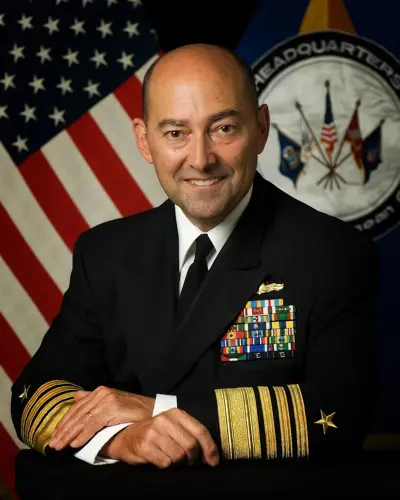
James George Stavridis is a retired United States Navy admiral, and bestselling author, currently an operating executive with the Carlyle Group and chair of the board of counselors at McLarty Associates. His novel, "2034: A Novel of the Next World War," was co-written with Elliot Ackerman and published in March, 2021. It debuted at #6 on the New York Times bestseller list. In August 2018, he stepped down as the dean of the Fletcher School of Law and Diplomacy at Tufts University, a graduate school for international affairs. Stavridis serves as the chief international diplomacy and national security analyst for NBC News in New York. He is also chair Emeritus of the Board of Directors of the U.S. Naval Institute and a senior fellow at the Johns Hopkins University Applied Physics Laboratory.
