Noreena Hertz Quotes
As an economist specializing in the global economy, international trade and debt, I have spent most of my career helping others make big decisions - prime ministers, presidents and chief executives - and so I'm all too aware of the risks and dangers of poor choices in the public as well as the private sphere.
Hertz, Noreena. Eyes Wide Open: How to Make Smart Decisions in a Confusing World. HarperBusiness, 2013.


The most successful way of poor nations developing rapidly is to trade with rich nations.


Large financial companies insist on profits at regular intervals and predictability whereas the innovative companies do not do well trying to meet those conditions and spending their time with the large finance company. While large financial companies were important to finance companies on the latter part of the 20th century, it was the smaller finance companies who financed most of the very important start-ups. By the 21st century, companies like Google and Facebook, made their own public stock offerings bypassing the financial industry. Many other smaller companies were financed via crowd sourcing which also bypasses the financial industry. His point is that the large successful companies can get the funds the need for growth without large finance companies. Smaller firms and startups can (and do) obtain funds through small finance firms or direct private investment. The large finance companies not only inhibit innovative growth he warns but they become such a dominant and controlling force that the industry becomes too big to fail, and the failure of a single large finance company could destroy the entire country’s economy. It happened to Island when their largest bank failed, and to the United States in the Meltdown of 2008.

Roosevelt saw to it that the contents of the telegram was shown to the press. Then this statement was seen by the foreign delegates who viewed themselves as ‘international bankers”. They were outraged and the conference blew up with no significant action taken. Roosevelt was desperately trying to lead America out of the Great Depression which Herbert Hoover had left him with. The dollar had been falling in value since the 1929 crash and one of the likely outcomes of the conference was European and other nations putting a plan together to stop the fall of the dollar. FDR however, wanted the dollar to continue to fall. This would make it harder for Americans by buy imported products, but easier to employ more Americans making products for export. The people hurt most by The Depression did not buy any imported products, and what they needed was food, housing, clothing, education and medical care, none of which would be affected by a weaker dollar and more expensive imports. However, he did not want a political argument with the wealthy and upper middle class who wanted cheaper imports, so some people believe that he made it seem that he had committed a diplomatic blunder and that caused the conference to collapse.


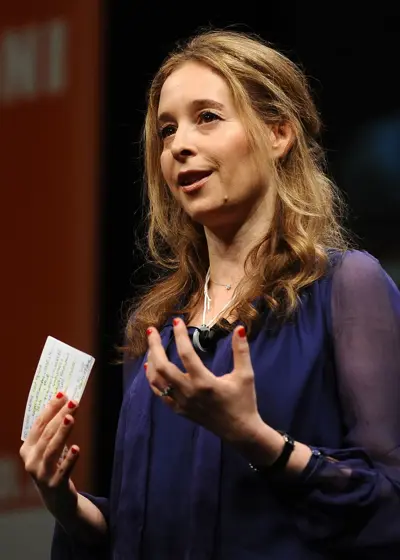
Noreena Hertz is an English academic, economist, author and has hosted her show, "MegaHertz: London Calling," on Sirius XM's Insight channel since 28 August 2017. She has been Honorary Professor at the Institute for Global Prosperity at University College London since 2014. She also acts as Sirius XM's chief Europe correspondent. In 2016 she joined ITV News as its Economics Editor.
