Mahatma Gandhi Quotes
Any imposition from without means compulsion. Such compulsion is repugnant to religion.
Gandhi, Mahatma. Harijan. 18 Aug. 1946, p. 268.

Quintus Septimius Florens Tertullianus


This quotation is important because it emphasizes an aspect of freedom of religion that is not usually discussed—the freedom to LEAVE a religion. As an Islamic reformer born in Iran, this notion is extremely important. Under Sharia—Islamic Law—capital punishment is required for anyone who converts from Islam to any other religion. This has been made a part of the civil law of many Islamic nations from Afghanistan to Saudi Arabia as well as Iran where Sharia IS the civil law. There is no other religion in the world which makes conversion away from the religion a capital crime requiring execution. Executing people who leave a religion is a major violation of the Universal Declaration of Human Rights.


This Sura of the Koran warns the faithful that the non-Muslims of the world have as a major objective the Conversion of Muslims. While this was and has been the case in times past starting even before the Crusades, many Christians felt it as an obligation to either convert the Muslims or to kill them. In modern times there have been Christian missionaries who have had an objective of converting Muslims, but no Christian government has had that as a policy for a long time now. But most Muslims are told this is so today and the Koran warned of this. The result is that many Muslims—particularly those who have not had much contact with other religions—believe that because of this, they will be forever fighting heretics like Christians. For this reason, Islam’s future is under attack.


Hindu temples and artworks are replete with sexually explicit scenes of the gods and goddesses.


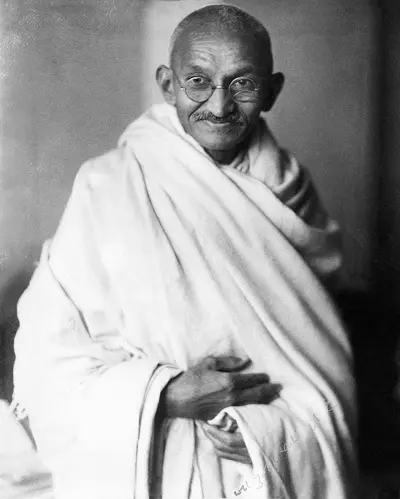
Mohandas Karamchand Gandhi was an Indian lawyer, anti-colonial nationalist, and political ethicist, who employed nonviolent resistance to lead the successful campaign for India's independence from British rule, and in turn inspired movements for civil rights and freedom across the world. The honorific Mahātmā (Sanskrit: "great-souled", "venerable"), first applied to him in 1914 in South Africa, is now used throughout the world.
