Mother Teresa Quotes
Any country that accepts abortion is not teaching its people to love but to use violence to get what they want.
Teresa, Mother. "National Prayer Breakfast Address." 3 Feb. 1994, Washington D.C.


Portugal, a traditional Roman Catholic nation where the Church has always had great influence, had laws banning abortion. However, in a national referendum the Portuguese people voted overwhelming to allow abortion despite the Church’s stand. The Parliament then overwhelmingly passed a law legalizing abortion on demand up to the 10 the week of pregnancy. The President, though opposed personally to abortion signed the bill. This quotation illustrates a common occurrence in industrial democracies whereby politicians will not impose their personal moral views on the laws of society but may well have contrary personal views.


Note, that like other feminist leaders of the time, she opposed abortion. However, between the economic pressures and the illegality of birth control devices and information provision, abortion was a critical decision that had to be faced by many women. Later, feminist leadership had to come to grips with the issue of who makes the decision in these areas, and placed the right of the woman to make these decisions, as opposed to husbands, fathers and government, as the highest priority. Then, when the drivers for abortion could not be eliminated, it was women who were criminalized. Feminists then fought for the right of abortion and the right of the woman to make decisions, but feminine leadership has never—in America—been advocates of abortion as opposed to the right of abortion, a subtlety that often is lost.
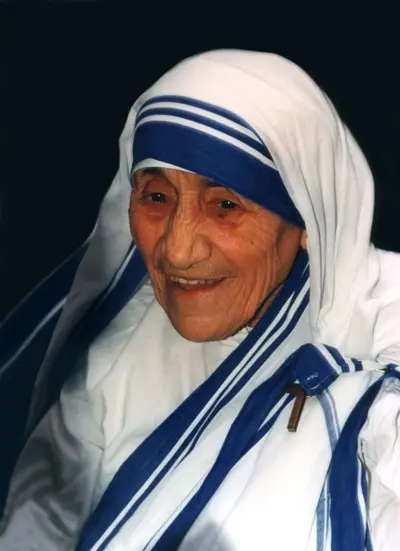
Mother Mary Teresa Bojaxhiu, honoured in the Catholic Church as Saint Teresa of Calcutta, was an Albanian-Indian Roman Catholic nun and missionary. She was born in Skopje (now the capital of North Macedonia), then part of the Kosovo Vilayet of the Ottoman Empire. After living in Skopje for eighteen years, she moved to Ireland and then to India, where she lived for most of her life.
