Selman Waksman Quotes
Antibiotics vary greatly in their chemical nature, mode of action upon different organisms, and effect upon the animal body. The selective action of antibiotics upon bacteria and other microorganisms is known as the antibiotic spectrum. Some antibiotics are characterized by a very narrow spectrum, whereas others possess a wide range of activity.
Waksman, Selman A. Microbial Antagonisms and Antibiotic Substances. The Commonwealth Fund, 1945.


The Netherlands and Belgium then belonged to Spain. However, Protestantism was spreading to the Netherlands. The Duke was a Catholic fanatic and advised the King to send him and an army into the Lowlands to root out and kill the heretics. In contrast, the Duke of Feria counseled allowing the lowlands tolerance. The King, himself a bloody fanatic sent Alba with the army. Over the next decade he murdered and executed thousands of Protestants and many Catholics who were more tolerant and thought Alba, who was given the derogatory nickname of “The Iron Duke. Ironically, this led to the Lowlands revolting and gaining independence from Spain.


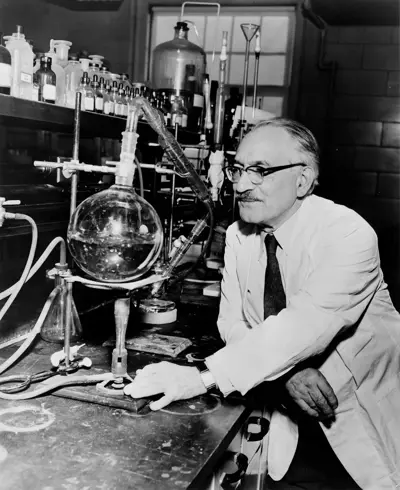
Selman Abraham Waksman was a Russian Empire-born Jewish-American inventor, biochemist and microbiologist whose research into the decomposition of organisms that live in soil enabled the discovery of streptomycin and several other antibiotics. A professor of biochemistry and microbiology at Rutgers University for four decades, he discovered a number of antibiotics (and introduced the modern sense of that word to name them), and he introduced procedures that have led to the development of many others. The proceeds earned from the licensing of his patents funded a foundation for microbiological research, which established the Waksman Institute of Microbiology located on the Rutgers University Busch Campus in Piscataway, New Jersey (USA). In 1952, he was awarded the Nobel Prize in Physiology or Medicine for "ingenious, systematic and successful studies of the soil microbes that led to the discovery of streptomycin." Waksman and his foundation later were sued by Albert Schatz, one of his PhD students and first discoverer of streptomycin, for minimizing Schatz's role in the discovery of streptomycin.
