Ted Olson Quotes
Another argument, vaguer and even less persuasive, is that gay marriage somehow does harm to heterosexual marriage. I have yet to meet anyone who can explain to me what this means. In what way would allowing same-sex partners to marry diminish the marriages of heterosexual couples?
Olson, Theodore B. "The Conservative Case for Gay Marriage." Newsweek, 9 Jan. 2010.


Earlier, he had opposed same sex marriage, but as the population as a whole had a change of mind on this issue, so did he. By 2013, 16 States had modified their laws to allow gay marriage.

This was an incredibly accurate prediction as 2 years thereafter, it was not only the major civil rights issue of the time, but it became a major general political and legal issue regarding the rights of states. Within year, 16 states allowed same sex marriage.


Two days earlier, New York Voted to legalize gay marriage and Alesi became the first Republican to vote for gay marriage. New York was the first state to legalize gay marriage by an act of their legislature and not by the judiciary on Constitutional grounds. Generally, most of the Republican politicians were opposed to marriage equality as they had the religious right wing of the party for whom gay marriage was anathema.

His view was that since gay marriage did not affect anyone else but the gay couple, it should not be illegal. This is an early Thomas Jefferson idea (see {604940} ) where Jefferson argues that since it does not effect him or anyone else if a person worships 20 gods or none, he and society has no business legislating against it. Those on the opposite side argued that if someone was an atheist or a pagan, it damaged the culture as a whole and offended their sense of morality. Therefore there must be a state religion. In modern times we are debating the same principle only gay marriage is the subject. Should the majority moral view control all or only those things that directly and negatively affect other people and not their moral sensibilities.


This quotation illustrates the brilliance of Scalia. He was in the minority of the Justices when he opposed gay marriage. However, instead of just writing a caustic dissent—which he did—he posed this question to one of the most brilliant attorneys in the country who was arguing the case for gay marriage. Clearly, gay marriage was not considered unconstitutional when the Founding Fathers wrote the Constitution. It is almost certain that no one in those times even considered such a prospect. However, by 2013 a number of states had allowed gay marriage, and the majority of Americans favored it. The best Olsen could answer was “There us no specific data in time. This is an evolutionary cycle”. Despite his oratory tour de force, Scalia was again in the minority and his view did not prevail. Public opinion had clearly changed, and most judges believed that the interpretation of the Constitution most also change and there is no more a specific time to say exactly when that change took place than there is to say exactly when America concluded that the nation should have Prohibition or any other social norm.


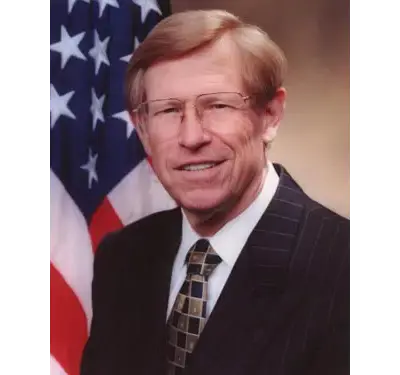
Theodore Bevry Olson is an American lawyer, practicing at the Washington, D.C. office of Gibson, Dunn & Crutcher. Olson served as United States Solicitor General (2001–2004) under President George W. Bush.
