Aristotle Quotes
And what has come to prevail in democracies is the very reverse of beneficial, in those, that is, which are regarded as the most democratically run. The reason for this lies in the failure properly to define liberty. For there are two marks by which democracy is thought to be defined: "sovereignty of the majority" and "liberty." "Just" is equated with what is equal, and the decision of the majority as to what is equal is regarded as sovereign; and liberty is seen in terms of doing what one wants.
Aristotle. The Politics. Translated by T.A. Sinclair, Penguin Books, 1962, p. 231.


“Lay-Away” is a term and concept that was widely used in before the ear of credit cards. Consumers would make a “down payment” on the merchandise they wanted to buy. The store would “lay it away” (store it) until the consumer came up with the money to pay for the entire sale and then he/she would get the use of the merchandise. But while on “lay-away” the consumer could not get the benefit of what he/she had bought.


The organization sent 2,100 volunteers to fight for South American independence from Spain.

The 3rd sentence is one of his greatest quotes. He delivered this speech towards the end of the 1st year of President Donald Trump's Administration. Althought he never mentioned Trump by name, this speech was a rare major criticism of a sitting president by a former president. This was also one of the few speeches Bush gave after leaving office. On the same day, former President Barak Obama also gave a major speech and also castigated President Trump although neither of the ex-presidents knew that the other was about to deliver their criticism of Trump. It was one of the very unusal occurances in American history.


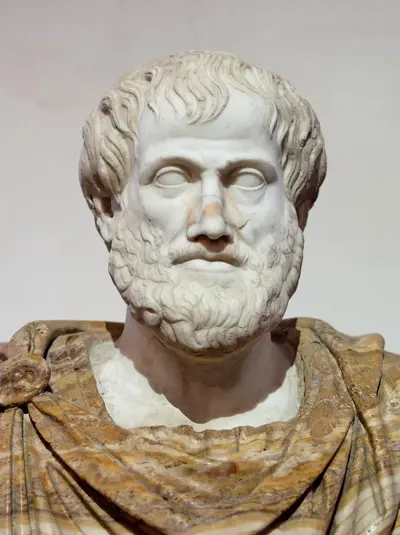
Aristotle (/ærɪˈstɒtəl/; Greek: Ἀριστοτέλης Aristotélēs, pronounced [aristotélɛːs]; 384–322 BC) was a Greek philosopher and polymath during the Classical period in Ancient Greece. Taught by Plato, he was the founder of the Lyceum, the Peripatetic school of philosophy, and the Aristotelian tradition. His writings cover many subjects including physics, biology, zoology, metaphysics, logic, ethics, aesthetics, poetry, theatre, music, rhetoric, psychology, linguistics, economics, politics, meteorology, geology and government. Aristotle provided a complex synthesis of the various philosophies existing prior to him. It was above all from his teachings that the West inherited its intellectual lexicon, as well as problems and methods of inquiry. As a result, his philosophy has exerted a unique influence on almost every form of knowledge in the West and it continues to be a subject of contemporary philosophical discussion.
