Lucretius Quotes
And since the mind is of a man one part,
Which in one fixed place remains, like ears,
And eyes, and every sense which pilots life;
And just as hand, or eye, or nose, apart,
Severed from us, can neither feel nor be,
But in the least of time is left to rot,
Thus mind alone can never be, without
The body and the man himself, which seems,
As 'twere the vessel of the same- or aught
Whate'er thou'lt feign as yet more closely joined:
Since body cleaves to mind by surest bonds.
Lucretius. Of the Nature of Things. Translated by William Ellery Leonard, J. M. Dent & Sons, 1916, p. 97.


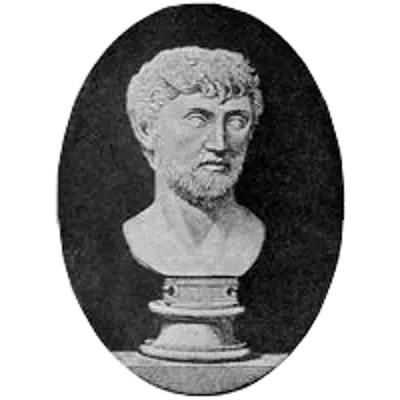
Titus Lucretius Carus (/ˈtaɪtəs luːˈkriːʃəs/ TY-təs loo-KREE-shəs, Latin: [ˈtɪtʊs lʊˈkreːtɪ.ʊs ˈkaːrʊs]; c. 99 – c. 55 BC) was a Roman poet and philosopher. His only known work is the philosophical poem De rerum natura, a didactic work about the tenets and philosophy of Epicureanism, and which usually is translated into English as On the Nature of Things. Lucretius has been credited with originating the concept of the three-age system that was formalised in 1836 by C. J. Thomsen.
