James Harrington Quotes
And government (to define it de facto, or according to modern prudence) is an art whereby some man, or some few men, subject a city or a nation, and rule it according to his or their private interest; which, because the laws in such cases are made according to the interest of a man, or of some few families, may be said to be the empire of men, and not of laws.
Harrington, James. The Commonwealth of Oceana. Printed by J. Streater for Livewell Chapman, 1656.


The United States had just ousted the popularly elected leader Patrice Lumumba {640611}, and backed Mobuto. Lumumba was an idealist who was not corrupt at all, but were not so sure about our new protégé. Sadly he turned out to be one of the worst kleptocrats of all time, and he stole with more United States money than we gave to many nations in toto. Many believe that one of the reasons, corruption of our “allied” leaders was so bad lies in the wording of this cable. Note that to the State Department writers there was “normal” corruption as opposed to excessive corruption. Once that view is taken there is a constant battle to determine whether each new act of corruption is “normal “ or not, and corruption is simply lessened by pushing back against the most abnormal schemes. These critics advocate a zero tolerance for corruption especially with United States AID money. The State Department has been ambivalent and have often used the corruption system to bribe leaders to obtain national objectives.


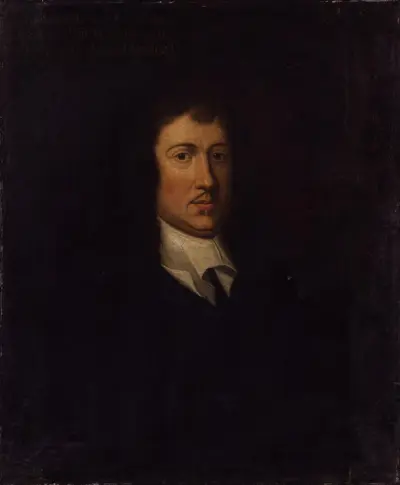
James Harrington (or Harington) was an English political theorist of classical republicanism. He is best known for his controversial publication The Commonwealth of Oceana (1656). This work was an exposition of an ideal constitution, a utopia, designed to facilitate the development of the English republic established after the regicide, the execution of Charles I in 1649.
