Ralph Waldo Emerson Quotes
An institution is the lengthened shadow of one man.
There is much argument about this. Most generally conceed this to be so in the founding and early early years of an institution, but over long periods of time, the institutions takes on many of the characteristics of the newer leaders who cast the new "shadow". But then there are institutions where powerful boards of directors direct and imprint the organization or the power is dispersed among several people, and the founding or current leader is not that critical. This is particuarly true of institutions such as the United Nations or the United States Supreme Court, and corporations such as Hewlett Packard in the early 21st Century.
Ralph Waldo Emerson, Quoted in Sherman, Gabriel. The Loudest Voice in the Room: How the Brilliant, Bombastic Roger Ailes Built Fox News--and Divided a Country, 2016
Sourced by: Eigen's Political and Historical Quotations


He was representing the Muslims of India. These are the descendants of the millions of Muslims who preferred to remain in majority Hindu India rather than join the new Islamic state of Pakistan. There are almost as many Muslims today in India as there are Muslims in Pakistan and more than there are in the Arab countries. However, unlike Pakistan, India is a democracy. However, the Indian Islamic leaders question whether or not they can turn the Islamic vision into a lasting Islamic culture without the force and power of the state. Only Turkey amongst the Islamic countries has been able to maintain an Islamic culture without using the political and legal force of the state to do it. But many Islamic orthodox thinkers believe that the Islamic culture in Turkey has been weakening over the years. Essentially, their concept of a permanent and stable Islamic culture requires the force of the state as that has been the historical experience. So there is constant pressure on the Indian government to pass laws that (for Muslims) enforce or require certain aspects of Islam, like parts of Sharia law while most Indian politicians are committed to maintaining a democracy with a separation of church and state.


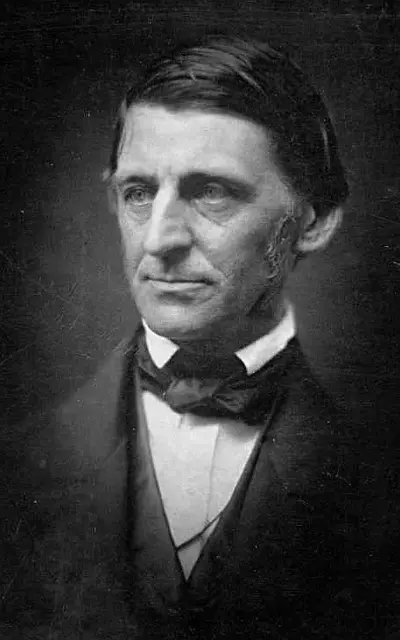
Ralph Waldo Emerson, who went by his middle name Waldo, was an American essayist, lecturer, philosopher, abolitionist and poet who led the transcendentalist movement of the mid-19th century. He was seen as a champion of individualism and a prescient critic of the countervailing pressures of society, and he disseminated his thoughts through dozens of published essays and more than 1,500 public lectures across the United States.
