Hugo Black Quotes
Among religions in this country which do not teach what would generally be considered a belief in the existence of God are Buddhism, Taoism, Ethical Culture, Secular Humanism and others.
Black, Hugo. Torcaso v. Watkins, 367 U.S. 488. Supreme Court of the United States, 1961, p. 495.


In an interview with a Norwegian magazine, the Eco stated that he had based his novel, “Foucault’s Pendulum”, on Chesterton’s epigram: “When men stop believing in God, they don’t believe in nothing, they believe in anything.” See related quote.


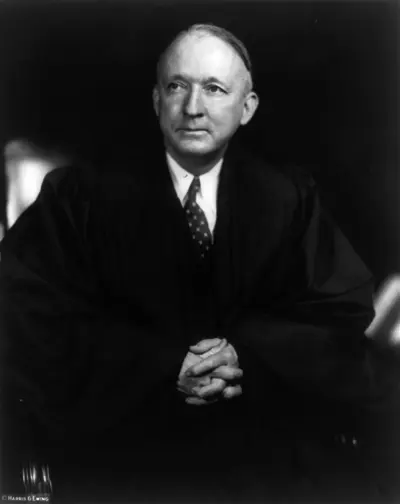
Hugo Lafayette Black was an American lawyer, politician, and jurist who served as a U.S. Senator from 1927 to 1937 and as an Associate Justice of the Supreme Court of the United States from 1937 to 1971. A member of the Democratic Party and a devoted New Dealer, Black endorsed Franklin D. Roosevelt in both the 1932 and 1936 presidential elections. Having gained a reputation in the Senate as a reformer, Black was nominated to the Supreme Court by President Roosevelt and confirmed by the Senate by a vote of 63 to 16 (six Democratic Senators and 10 Republican Senators voted against him). He was the first of nine Roosevelt appointees to the Court, and he outlasted all except for William O. Douglas.
