John Kerry Quotes
America must always be the world's paramount military power. But we can magnify our power through alliances.
Kerry, John. "Address Accepting the Presidential Nomination at the Democratic National Convention in Boston." The American Presidency Project, 29 July 2004.


No military alliances has been a tradition in American politics which broke down and changed in our allied effort in WWI. Harding and the Republicans of his day, wanted to reestablish that principle of American Foreign policy. They succeeded, but WWII and its Cold War aftermath made a major change in U. S. policy on this point, and NATO was not only a major permanent military alliance, but lasted well beyond the fall of the Soviet Union. America and our NATO allies were so pleased with the benefits of a permanent military alliance, that they preserved it by looking hard for missions that it could take on rather than dissolve NATO.


Every major Western power and Japan were looking to control parts of China for their own mercantile advantage. The Emperor, her adopted son, had stated that under no circumstances would the Chinese fight, but Cixi issued this decree, in effect, overruling the Emperor—a remarkable occurrence.
China, which had been one of the strongest and most modern nations in the world for 1000 years had lapsed into decay and though a huge nation, rich in resources, with more people than any other had been eclipsed by Japan, America and Europe. Cixi was determined to remedy that, and to a great extent started China on the road to modernization which would take over 100 years more.


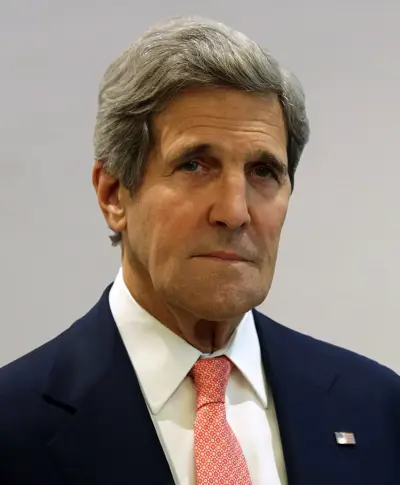
John Forbes Kerry is an American politician and diplomat serving as the United States Special Presidential Envoy for Climate. He previously served as the 68th United States Secretary of State from 2013 to 2017. An attorney and former naval officer, Kerry first drew public attention as a decorated Vietnam veteran turned anti-war activist. He went on to serve as a prosecutor and as Lieutenant Governor of Massachusetts, before serving as United States Senator from Massachusetts from 1985 to 2013. A member of the Democratic Party, he was the Democratic nominee for President of the United States in the 2004 election, which he lost to incumbent President George W. Bush. He is the last Democratic presidential candidate to date to lose the popular vote.
