Werner Heisenberg Quotes
Although the theory of relativity makes the greatest of demands on the ability for abstract thought, still it fulfills the traditional requirements of science insofar as it permits a division of the world into subject and object (observer and observed) and, hence, a clear formulation of the law of causality.
Heisenberg, Werner. The Physical Principles of the Quantum Theory. Translated by Carl Eckart and Frank C. Hoyt, University of Chicago Press, 1930, p. 2.


Born was a refugee who escaped to England from Nazi Germany.

This quotation was a milestone on scientific and technological development. For the first time in human history the smartest and most creative and visionary people, could not understand or comprehend the direction in which science and technology was moving. It now took people with specialized mathematical capability. Experience and intuitive insight was actually counter-productive in understanding the world as it was being revealed. Intelligence, creativity, perseverance and hard work, for the first time was insufficient. Education and training was the new requirement in addition to the others.


We have two opposite dynamics operating today. On the one hand the scientific breakthroughs like Quantum Mechanics and genetic engineering widen the intellectual gap immensely between the average person (and politicians) and the scientist—at a time when society must make enormous decisions on scientific matters. On the other hand, there have never been so many people before educated in the sciences. There are many (not a majority) high school students who today understand Relativity and even well and broadly educated non-science college graduates are often familiar with Relativity, Quantum Mechanics, and other scientific breakthroughs of the 20th century. The world as a whole has never had so many scientifically literate people as today, nor has it ever had so many scientifically illiterate people today.


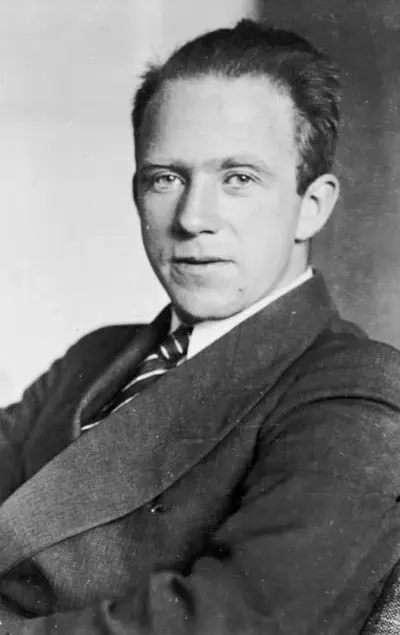
Werner Karl Heisenberg was a German theoretical physicist and one of the key pioneers of quantum mechanics. He published his work in 1925 in a breakthrough paper. In the subsequent series of papers with Max Born and Pascual Jordan, during the same year, this matrix formulation of quantum mechanics was substantially elaborated. He is known for the uncertainty principle, which he published in 1927. Heisenberg was awarded the 1932 Nobel Prize in Physics "for the creation of quantum mechanics".
