Konrad Lorenz Quotes
All too willingly man sees himself as the centre of the universe, as something not belonging to the rest of nature but standing apart as a different and higher being. Many people cling to this error and remain deaf to the wisest command ever given by a sage, the famous "Know thyself" inscribed in the temple of Delphi.
Lorenz, Konrad. On Aggression. Harcourt, Brace & World, 1966, p. 220.


Teller had been a strong proponent of developing the H-bomb. Oppenheimer, however, was opposed on moral and strategic grounds. Politically, Oppenheimer had a strong following, having been the “Father of the Atomic Bomb,” and his opposition was hurting the political effort to vote the funds. The Chairman of the Atomic Energy Commission, Lewis L. Strauss, and some in the military decided that they would discredit Oppenheimer by claiming that he had communist leanings and his ideas were influenced by his pro-communist views. Oppenheimer was an easy victim as his brother had been a card-carrying communist and he had always known many left wing academic intellectuals in his university background. Despite the fact that all this had been known by the government security people for years and he had never let a secret leak, a hearing was held to determine whether Oppenheimer’s security clearance should be removed. The key testimony was given by General Groves, Oppenheimer’s former boss who had cleared Oppenheimer for security for years, and Teller. It was later discovered that Groves had been blackmailed into testifying against Oppenheimer. Later Teller, who defended his strong views contrary to Oppenheimer’s, regretted that he won his battle the way he did and told the world that Oppenheimer was a patriot and would never do anything knowingly to hurt his country. To the end of his career over 50 years afterward, there were still many scientists who would turn their backs on Teller at scientific meeting and would not even shake his hand.


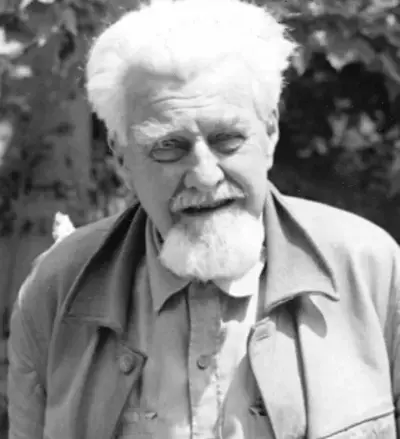
Konrad Zacharias Lorenz was an Austrian zoologist, ethologist, and ornithologist. He shared the 1973 Nobel Prize in Physiology or Medicine with Nikolaas Tinbergen and Karl von Frisch. He is often regarded as one of the founders of modern ethology, the study of animal behavior. He developed an approach that began with an earlier generation, including his teacher Oskar Heinroth.
