Gianni Agnelli Quotes
All the technology of our production was still pre-War. They were sort of '38, '39 and the War had been stable and so we were infinitely behind whatever had been going on in the United States for instance.
Agnelli, Gianni. Interview. Cold War, episode 3, "Marshall Plan, 1947-1952", CNN, 11 Oct. 1998.


In the early years of our nation, there was not much intellectual property being developed in America. We were an underdeveloped nation, and we took whatever we could get regardless of laws. Alexander Hamilton for example urged obtaining industrial trade secrets and even machines by whatever means was necessary. However in the latter part of the 19th century, Nathaniel Hawthorns, Mark Twain and other creative Americans persuaded the government to join copyright conventions; we had become the victim of intellectual piracy rather than the pirates. Then we became the leading nation in advocating and enforcing intellectual property rights. This coincided with our becomng the leading producer of intellectual property. Intellectual property rights has always been an issue of “whose ox was gored.” The US position is somewhat hypocritical given our early history. However, respect for intellectual property rights, we now argue, in our modern global economy will encourage businesses to not only invest in developing countries but allow their technology and trade secrets to be used in the developing nation.


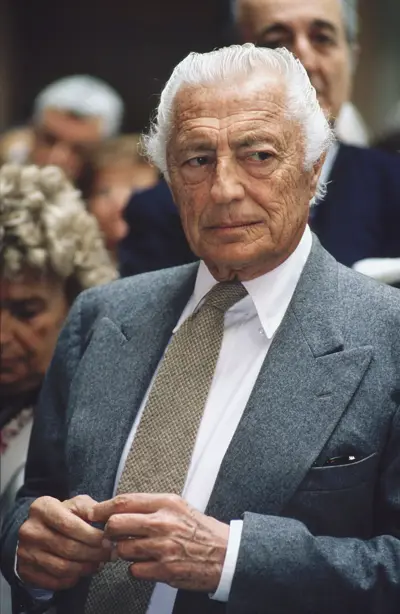
Agnelli was educated at Pinerolo Cavalry Academy, and studied law at the University of Turin, although he never practiced law. He joined a tank regiment in June 1940 when Italy entered World War II on the side of the Axis powers. He fought on the Eastern Front, being wounded twice. He also served in a Fiat-built armoured-car division in North Africa, where he was shot in the arm by a German officer during a bar fight over a woman. After Italy surrendered, due to his fluency in English, Agnelli became a liaison officer with the occupying American troops. His grandfather, who had manufactured vehicles for the Axis powers during the war, was forced to retire from Fiat, but named Valletta to be his successor. Gianni's grandfather died, leaving Gianni head of the family but Valletta running the company. Fiat then began producing Italy's first inexpensive mass-produced car.
