Alexander Herzen Quotes
All religions have based morality on obedience, that is to say, on voluntary slavery. That is why they have always been more pernicious than any political organization.
Alexander Herzen, 1812-1870, Russian Philosopher, From the Other Shore, 1855
Sourced by: Eigen's Political and Historical Quotations


Congress had passed the Edmunds Act prohibiting plural marriage. Taylor, who himself had 7 wives and 35 children, went “underground” and secretly operated the church from exile.


Patton was no exception. The religious leaders of any community, if co-opted, can make occupation much easier.


Most European monarchies and strong, powerful states were theocratic empires and had as their foundation a ruling family and a national church. In Japan, the churches were politically weak, and so the designers of the Japanese empire created the concept of a divine emperor where spiritual and temporal power could be the embodiment of the state which in their view had to have both dimensions. See Ito’s statement on the subject: {604492}


Watchtower Bible and Tract Society of New York


Hizb ut-Tahrir is a “worldwide Islamic political party.” It is banned as a terrorist, violence provoking institution in most of the Muslim countries and many nations in Europe.

It is hard to compromise on a position where advocates believe they are following God’s commandment. To compromise is to abandon God and morality. Issues like abortion, gay marriage, and prayer in public activities are examples of issues of seeming intractable resolution.


In 1877 Wasburn was dropped from the List of Ministers by the Unitarian Church. He had become quite atheistic.
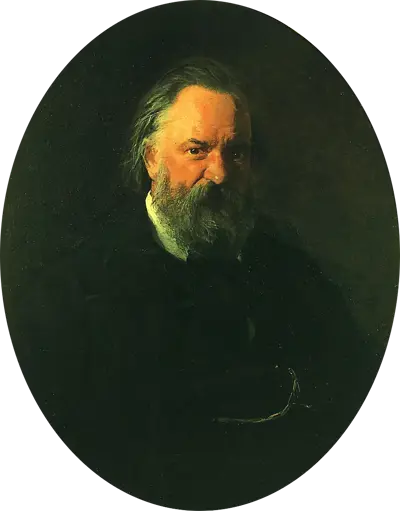
Alexander Ivanovich Herzen was a Russian writer and thinker known as the "father of Russian socialism" and one of the main fathers of agrarian populism (being an ideological ancestor of the Narodniki, Socialist-Revolutionaries, Trudoviks and the agrarian American Populist Party). With his writings, many composed while exiled in London, he attempted to influence the situation in Russia, contributing to a political climate that led to the emancipation of the serfs in 1861. He published the important social novel Who is to Blame? (1845–46). His autobiography, My Past and Thoughts (written 1852–1870), is often considered one of the best examples of that genre in Russian literature.
