Friedrich Nietzsche Quotes
All philosophers make the common mistake of taking contemporary man as their starting point and of trying, through an analysis of him, to[21] reach a conclusion. "Man" involuntarily presents himself to them as an aeterna veritas as a passive element in every hurly-burly, as a fixed standard of things. Yet everything uttered by the philosopher on the subject of man is, in the last resort, nothing more than a piece of testimony concerning man during a very limited period of time.
Nietzsche, Friedrich. Human, All Too Human. Translated by R. J. Hollingdale, Cambridge University Press, 1996, p. 12.


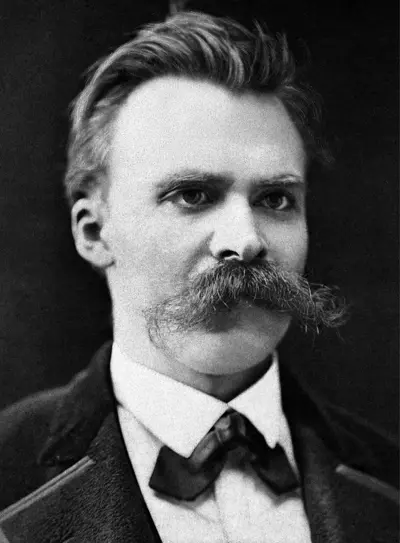
Friedrich Wilhelm Nietzsche was a German philosopher, cultural critic, composer, poet, writer, and philologist whose work has exerted a profound influence on modern intellectual history. He began his career as a classical philologist before turning to philosophy. He became the youngest person ever to hold the Chair of Classical Philology at the University of Basel in 1869 at the age of 24. Nietzsche resigned in 1879 due to health problems that plagued him most of his life; he completed much of his core writing in the following decade. In 1889, at age 44, he suffered a collapse and afterward a complete loss of his mental faculties. He lived his remaining years in the care of his mother until her death in 1897 and then with his sister Elisabeth Förster-Nietzsche. Nietzsche died in 1900.
