Susan Sontag Quotes
Again: there is nothing inherently superior about resistance. All our claims for the righteousness of resistance rest on the rightness of the claim that the resisters are acting in the name of justice. And the justice of the cause does not depend on, and is not enhanced by, the virtue of those who make the assertion. It depends first and last on the truth of a description of a state of affairs that is, truly, unjust and unnecessary.
Sontag, Susan. "Courage and Resistance." At the Same Time: Essays and Speeches. Farrar, Straus and Giroux, 2007, p. 65.


There were other Roman Catholics who used violence including physically attacking the Tithe Collectors. In Ireland at the time the established church—the Protestant Anglican Church of Ireland—had the legal right to collect annual Tithes from the population in order to fund the activities of the Church. One difficulty however, was that the majority of the population were Roman Catholics. The poorest of them could not afford the tithe payments to any church. Whereas in the past, the Protestant Church officials did not force the issue of tithe collection from the poor, in about 1830 they changed and seized the property of the poor (Protestants and Catholics) and auctioned it off to pay for the tithe. The Cardinal organized a campaign of non-violent civil disobedience to combat the Tithe.


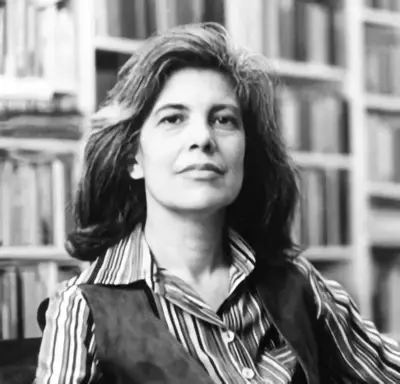
Susan Sontag was an American writer, filmmaker, philosopher, teacher, and political activist. She mostly wrote essays, but also published novels; she published her first major work, the essay "Notes on 'Camp'", in 1964. Her best-known works include the critical works Against Interpretation (1966), Styles of Radical Will (1968), On Photography (1977), and Illness as Metaphor (1978), as well as the fictional works The Way We Live Now (1986), The Volcano Lover (1992), and In America (1999).
