John of Salisbury Quotes
Accurate reading on a wide range of subjects makes the scholar; careful selection of the better makes the saint.
Salisbury, John of. Frivolities of Courtiers and Footprints of Philosophers. Translated by Joseph B. Pike, University of Minnesota Press, 1938.


This proverb probably originated during the golden age of Islamic scholarship when the Muslim world preserved and advanced the philosophy and science of the West. Such a value would likely not be espoused today by most Muslim clerics and leaders. Some say that this change is precisely why Islam is deteriorating.
The papyrus appears to be an instruction booklet for government officials. The Egyptians thought that thinking and the intellect is done by the heart. In this context we would say, “Don’t let your head get big ….”

1st Marquees of Halifax. This is a very important quotation because it still has much validity today. The “Prince” is the Monarch, King or Official Heading the State. Savile points out that if the Price does not take the time or make the effort to understand an issue and its complexity, he then must trust his advisors and their opinions rather than have any intelligent and knowledgeable views of his own. In modern times the advice applies to elected officials, executive and legislative. If they do not take time and make the effort to understand a complex issue, they cannot use their own judgment but must accept the judgment of staff, friends, colleagues, party leaders, lobbyists or members of committees who they hope are not also ignorant. In modern legislatures, there are so many different issues in so many areas, that it is very difficult to have the time to make the effort to study all the issues. This problem is compounded with politicians as they tend to spend large amounts of their time fundraising for their next election and simply do not have enough time to study issues. In the Congress for example, most members vote on bills that they have not even read and they end up trusting someone else’s judgment.


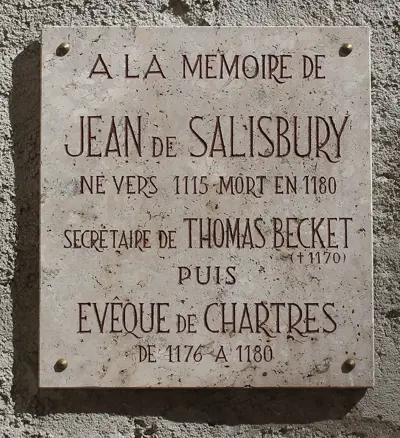
John of Salisbury, who described himself as Johannes Parvus ("John the Little"), was an English author, philosopher, educationalist, diplomat and bishop of Chartres.
