Wole Soyinka Quotes
A tiger does not proclaim his tigritude, he pounces.
Soyinka, Wole. Speech at the Conference of African Writers of English Expression, June 1962, Makerere University College, Kampala, Uganda.


This line summarizes a principle of political leadership which demagogues understand intuitively and some other politicians learn. To galvanize or mobilize the public, set lofty, important objectives and goals and not small matters. Abraham Lincoln and Franklin Delano Roosevelt, two of our greatest Presidents, were able to do this very well. Other presidents and many politicians try this with minor issues that they think important and great, but they are often unsuccessful because only a small part of the population—the true believers—agree with the importance and greatness.

The general had reviewed the 9 objectives that the President had given him for the occupation and reconstruction of Iraq and had told Mr. Bush that he could not accomplish 4—the most important ones.

Referring to his small minority party:

In early WWII, he opposed the Japanese military practice of killing conquered civilian people to instill fear and make them accept occupation. (In this case in occupied Indonesia). He was arrested by the military and sentenced to death, but he never was executed. Though not generally known, there were a number of Japanese who opposed the Japanese military policies and practices. He was one.

Hebert was one of the first politicians to formally use the language of “Hawks” and “Doves” to publicly state his views on military matters.

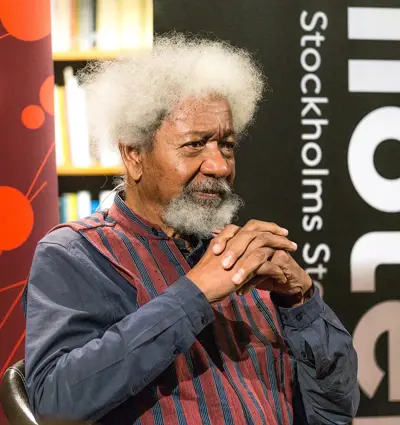
Akinwande Oluwole Babatunde Soyinka, known as Wole Soyinka (pronounced [wɔlé ʃójĩnká]), is a Nigerian playwright, novelist, poet, and essayist in the English language. He was awarded the 1986 Nobel Prize in Literature, the first sub-Saharan African to be honoured in that category. Soyinka was born into a Yoruba family in Abeokuta. In 1954, he attended Government College in Ibadan, and subsequently University College Ibadan and the University of Leeds in England. After studying in Nigeria and the UK, he worked with the Royal Court Theatre in London. He went on to write plays that were produced in both countries, in theatres and on radio. He took an active role in Nigeria's political history and its struggle for independence from Great Britain. In 1965, he seized the Western Nigeria Broadcasting Service studio and broadcast a demand for the cancellation of the Western Nigeria Regional Elections. In 1967, during the Nigerian Civil War, he was arrested by the federal government of General Yakubu Gowon and put in solitary confinement for two years.
