Quentin Tarantino Quotes
A thing when I was writing the movie 'The hateful eight' was, I hate The Confederate cause. I've always felt that they are our Nazis and the rebel flag was our swastika. So I totally have no love for that whole romance for that Antebellum time period.
Tarantino, Quentin. Interview by Collin Robbie. The Telegraph, Telegraph Media Group, 11 Dec. 2015.


When he referred to "the noose" he was connoting one of the major ways the Southern Segregationists and racists maintained white supremacy and Jim Crowe after the Civil War: Lynching. They terrorized blacks and whites who had different views by kidnapping their victims, torturing them, hanging them, and often mutilating their bodies after the murder. They never were convicted because the Southern law enforcement officers were often part of the lynch mob, the judges were usually themselves racist segregationists, and if jurors voted to convict in the few cases that went to trial, they themselves were risking lynching. From 1882-1968, 4,743 lynchings occurred in the United States. Of these people that were lynched, 3,446 were black.


Newsletter of the United Sons of Confederate Veterans

After attending a Lincoln speech, Booth said to Lewis Powell, one of his band of conspirators, “Now, by God, I’ll put him through. That is the last speech he will ever make.”

Phelps was a Copperhead Democrat who was a virulent racist, an enemy of Lincoln and supported McClellan against Lincoln in 1864. His extreme disrespect for the President and his racism was not appreciated in Vermont, and Phelps not only failed to help McClellan but destroyed his own credibility in his home state of Vermont. Phelps had been practicing law in New York City where there was a large Copperhead, racist and anti-Lincoln part of the population there.


This idea has been rejected by American Blacks from before the Civil War. There were many Black families that have been in America longer than Rockwell who always had the choice to go back to where they cam from if they were unhappy with America but they never did.

Oates was a Confederate Colonel during the Civil War. His statement almost started a brawl as the Memorial Dedication was a joint North-South participation event. Northern politicians, officers and men were outraged and rose to their feet with several mounting the rostrum to refute Oates intemperate remarks. However, like Southern politicians of the 1960s, they produced a lot of redneck support with such extreme statements. The main reason this quotation is important is that most politicians of North and South wanted to get the animosity of the Civil War over with and to do so sponsored these memorial events where both sides could celebrate and remember the bravery of men fighting and dying for their cause. The photographs of former enemies shaking hands which the newspapers ran frequently, would give the impression that by the 1880s the hatred and animosity of the Civil War was behind the nation. However, that was not at all true. Most veterans of both sides maintained their hatreds throughout their entire lives. Even their children carried the hatred into the next generation. Politicians were expected to not open the scabs of the old wounds in public, but many like Oates found political utility in not doing so. The moral outrage of many in the North remained until WWII when regional unity genuinely transcended the Civil War. See {639364} for a Northern example with no political motive but with uncontrollable moral outrage.


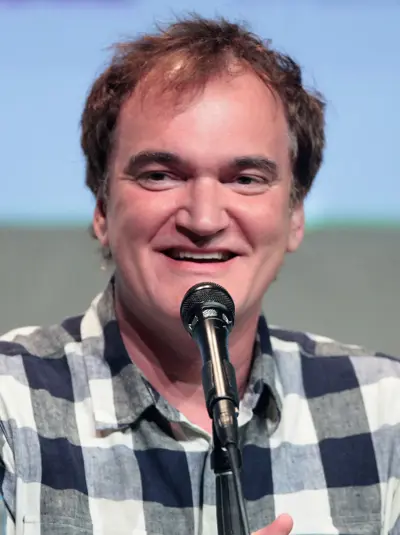
Quentin Jerome Tarantino is an American film director, screenwriter, producer, and actor. His films are characterized by nonlinear storylines, dark humor, aestheticization of violence, extended scenes of dialogue, ensemble casts, references to popular culture and a wide variety of other films, eclectic soundtracks primarily containing songs and score pieces from the 1960s to the 1980s, alternate history, and features of neo-noir film.
