Maya Angelou Quotes
A story went the rounds about a San Franciscan white matron who refused to sit beside a Negro civilian on the streetcar, even after he made room for her on the seat. Her explanation was that she would not sit beside a draft dodger who was a Negro as well. She added that the least he could do was fight for his country the way her son was fighting on Iwo Jima. The story said that the man pulled his body away from the window to show an armless sleeve. He said quietly and with great dignity, "Then ask your son to look around for my arm, which I left over there.
Angelou, Maya. I Know Why the Caged Bird Sings. Random House, 1969, p. 209.


Scott was then the Special Advisor on Negro Affairs to the Secretary of War in the Woodrrow Wilson administration. Wilaon hs commited U. S. Troops to fight oversease to "make the world safe for democracy", but many blacks and whites also saw gross hypocricy in asking Negores to fight for a Jim Crow, segregated America. See the related quotation 644805. Scott was also the major aide to Booker T, Washington, one of the leading Negro educators but a very pliable man on equal rights for the Blacks. The problem for the administration was much greater than that of WWII where the president was seen as very sympathetic to Blacks while Wilson was himself a racist. And in WWII the fight against the Nazis was a fight agaisnt racial supremacy. So this quotation and Scott's role was very important to the administration.


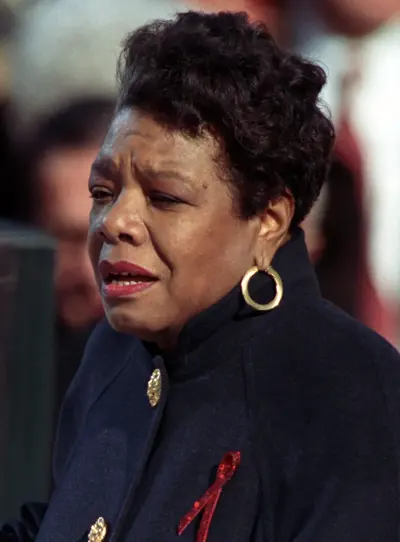
Maya Angelou was an American poet, memoirist, and civil rights activist. She published seven autobiographies, three books of essays, several books of poetry, and is credited with a list of plays, movies, and television shows spanning over 50 years. She received dozens of awards and more than 50 honorary degrees. Angelou is best known for her series of seven autobiographies, which focus on her childhood and early adult experiences. The first, I Know Why the Caged Bird Sings (1969), tells of her life up to the age of 17 and brought her international recognition and acclaim.
