Martin Buber Quotes
A story must be told in such a way that it constitutes help in itself. My grandfather was lame. Once they asked him to tell a story about his teacher. And he related how the holy Baal Shem used to hop and dance while he prayed. My grandfather rose as he spoke, and he was so swept away by his story that he himself began to hop and dance to show how the master had done. From that hour he was cured of his lameness. That's how to tell a story.
Buber, Martin. Tales of the Hasidim: The Early Masters. Translated by Olga Marx, Schocken Books, 1947, p. 1.


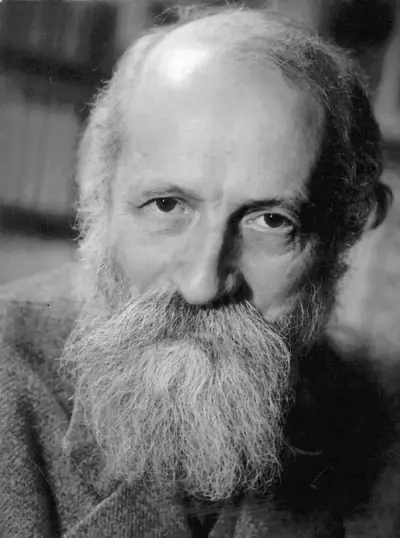
Martin Buber was an Austrian Jewish and Israeli philosopher best known for his philosophy of dialogue, a form of existentialism centered on the distinction between the I–Thou relationship and the I–It relationship. Born in Vienna, Buber came from a family of observant Jews, but broke with Jewish custom to pursue secular studies in philosophy. In 1902, he became the editor of the weekly Die Welt, the central organ of the Zionist movement, although he later withdrew from organizational work in Zionism. In 1923, Buber wrote his famous essay on existence, Ich und Du (later translated into English as I and Thou), and in 1925, he began translating the Hebrew Bible into the German language.
