Julian Bond Quotes
A standard criticism that is always made by the opponents of justice of the proponents of justice is that the proponents are divisive.
Julian Bond, 1940-1975, U. S. Congressman (Democrat, GA), Chairman, NAACP, Lecture, C-SPAN Book TV, March 3, 2001
Sourced by: Eigen's Political and Historical Quotations


The issue of slavery which had been suppressed in Congress for the first decades of the nation broke out when Missouri statehood was considered. By previous agreement, slavery was not even discussed in Congress but the time period elapsed. Tallmadge not only proposed that no more slaves could come into Missouri {613176} but most shocking to the Southerners was that every person born in the new state would be free at the age of 25. In a generation, there would be no more slavery in Missouri and there would be no economic compensation for slave owners at all. The House of Representatives accepted the amendment, but it failed in the Senate. At that time, Senators were not elected by voters but were appointed by the state legislators and the Southern slave states had a disproportionate share of the senate from a population point of view. But what this quotation shows clearly that a majority of the country in 1819 were opposed to slavery and were willing to end it without compensation.


AI Explanation: This is a famous philosophical observation attributed to the early Christian author Lactantius. It suggests that true poverty isn't about a lack of material wealth, but rather being denied fairness, equality, or your rightful claims.


The city he represented had, under his leadership, declared itself a nuclear-free zone, protested apartheid in front of the South African embassy in Washington, fought for rent-control during a period of soaring rents, and became known as "the Berkeley of the East":


1st Earl of Beaconsfield


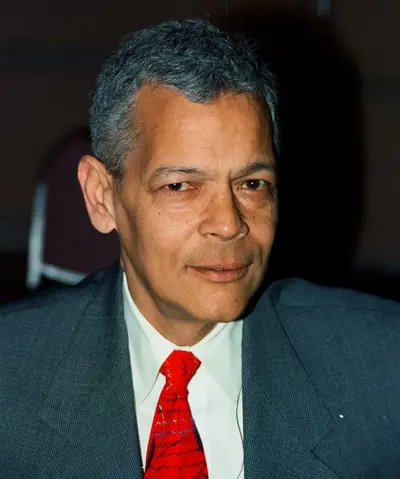
Horace Julian Bond was an American social activist, leader of the civil rights movement, politician, professor, and writer. While he was a student at Morehouse College in Atlanta, Georgia, during the early 1960s, he helped establish the Student Nonviolent Coordinating Committee (SNCC). In 1971, he helped found the Southern Poverty Law Center in Montgomery, Alabama, and served as its first president for nearly a decade.
