Teresa of Avila Quotes
A slight failing in one virtue is enough to put all the others to sleep.
Teresa of Avila. The Way of Perfection. Translated by E. Allison Peers, Image Books, 1964.


This vague criterion was in effect and was initially used to clear scientists at Los Alamos and their spouses who were part of the team that was to develop the Atomic Bomb. The Army security people however had never been in such a situation before. Few distinguished scientists wanted to come to Los Alamos to begin with as once there, they were there for the duration of the war and were cut off from friends and relatives. But there were very few people in the entire country who had the unique education and training. When the security people rejected a candidate before that time, another person was recruited. But for many of the scientists at Los Alamos, they were one of a kind. There were not two Enrico Femi’s or Luis Alverez’s. “Moral fiber” could mean anything and the American academic world has always tolerated a wider variety of behavior then most of the rest of society. Sexual activity, left wing views, parental irresponsibility, failure to pay debts, attacking religion or religious organizations all created problems. But the biggest problem was association with others of “demonstrated weakness in moral fiber” including communists and left wingers. In most university settings, with a norm or tolerance, almost all associated with “undesirables”. As a result many scientists or family members could not get cleared. But the project could not function without them, and if some were fired for that reason, many others might have quit. Finally, General Groves, relaxed the standards, yet the army security officers were constantly suspicious. This criterion was in use as late as the 1960s where a brilliant scientist working in the Executive Office of the President was threatened with dismissal for this reason. She had borne an illegitimate child years earlier.


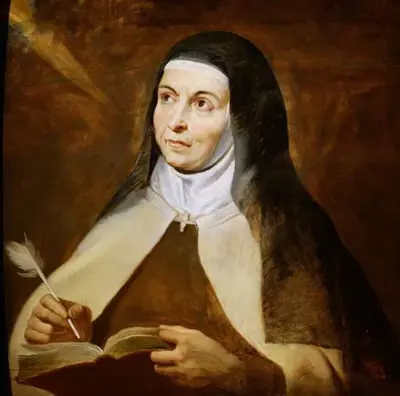
Teresa of Ávila, born Teresa Sánchez de Cepeda y Ahumada, also called Saint Teresa of Jesus, was a Spanish noblewoman who felt called to convent life in the Catholic Church. A Carmelite nun, prominent Spanish mystic, religious reformer, author, theologian of the contemplative life and of mental prayer, she earned the rare distinction of being declared a Doctor of the Church, but not until over four centuries after her death. Active during the Catholic Reformation, she reformed the Carmelite Orders of both women and men. The movement she initiated was later joined by the younger Spanish Carmelite friar and mystic John of the Cross. It led eventually to the establishment of the Discalced Carmelites. A formal papal decree adopting the split from the old order was issued in 1580.
