John Gresham Machen Quotes
A public-school system, if it means the providing of free education for those who desire it, is a noteworthy and beneficent achievement of modern times; but when once it becomes monopolistic it is the most perfect instrument for tyranny which has yet been devised. Freedom of thought in the middle ages was combated by the Inquisition, but the modern method is far more effective.’ (1923)
Machen, J. Gresham. Christianity and Liberalism. The Macmillan Company, 1923, p. 14.


This was a poem about the early persecution of Quakers.


While the Visigoths had some very advanced legal principles, this law, quoted in its entirety is typical of the nations that were part of the Catholic world. The church and its doctrines were immune from any possible criticism, explicit or implicit. This is the most formalized and sophisticated compendium of laws of the so-called “barbaric peoples” of Europe. The compilation was in many ways a documentation of the traditional laws of the Visigoths that had evolved over hundreds of years.

Ingersoll was considered to be the greatest orator and political thinker of his day, but his overt atheistic views curtailed his elected political career.


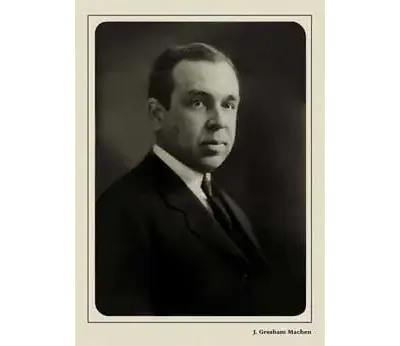
John Gresham Machen (/ˈɡrɛsəm ˈmeɪtʃən/; 1881–1937) was an American Presbyterian New Testament scholar and educator in the early 20th century. He was the Professor of New Testament at Princeton Seminary between 1906 and 1929, and led a conservative revolt against modernist theology at Princeton and formed Westminster Theological Seminary as a more orthodox alternative. As the Northern Presbyterian Church continued to reject conservative attempts to enforce faithfulness to the Westminster Confession, Machen led a small group of conservatives out of the church to form the Orthodox Presbyterian Church. When the northern Presbyterian church (PCUSA) rejected his arguments during the mid-1920s and decided to reorganize Princeton Seminary to create a liberal school, Machen took the lead in founding Westminster Seminary in Philadelphia (1929) where he taught New Testament until his death. His continued opposition during the 1930s to liberalism in his denomination's foreign missions agencies led to the creation of a new organization, the Independent Board for Presbyterian Foreign Missions (1933). The trial, conviction and suspension from the ministry of Independent Board members, including Machen, in 1935 and 1936 provided the rationale for the formation in 1936 of the OPC.
