Niccolo Machiavelli Quotes
A prudent ruler cannot and should not observe faith [keep his promises] when such observance is to his disadvantage.
Niccolo Machiavelli, 1469-1527, Florentine statesman and political philosopher, The Prince
Sourced by: Eigen's Political and Historical Quotations


with a treaty or agreement


This is a very important quotation. No one likes to make moral compromises, but Mann realized that there was a necessity in a complex society—especially a republic to make compromises. Politics cannot function without compromises of all kinds moral and otherwise as different people have different views of morality and rectitude. Mann observed that if compromises must be made, it is better for the politicians to make them than the educators, physicians, clerics, and other professional groups. Therefore politics takes the heat so that the other institutions of society do not have to. Thus politics has this crucial role among its others according to Mann.


Samuel Langhorne Clemens, 1835-1910


She was referring to the fact that the military dictator of Pakistan would take billions of dollars of aid to facilitate Pakistan’s efforts in fighting the Islamic fundamentalist terrorists in Pakistan and Afghanistan. However, much of the money went into the pockets of corrupt government and military officials. The remainder strengthened the military somewhat but the Pakistanis used their military to pressure India—not to fight Islamic terrorists. The Pakistani military intelligence units actually assisted the worst of the Islamic terrorist organization so they could use them to launch terror attacks against Hindu India. Bhutto was running for the Presidency to change that; she was assassinated. Her husband won, and Pakistan for the first time has begun to fight back against the terrorists, but still protected those terrorists who would kill innocent civilians in India.
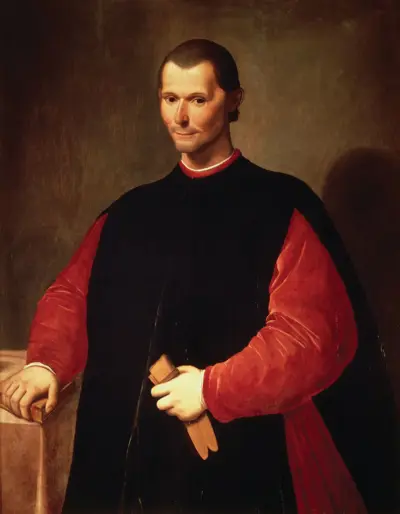
Niccolò di Bernardo dei Machiavelli was an Italian Renaissance diplomat, philosopher and writer, best known for The Prince (Il Principe), written in 1513. He has often been called the father of modern political philosophy and political science.
