William O. Douglas Quotes
A powerful lobby [the National Rifle Association] dins into the ears of our citizenry that these gun purchases are constitutional rights protected by the 2nd Amendment.
The 2nd Amendment to the Constitution has, according to all Supreme Court decisions, never given the right to bear arms to individual citizens—only to the state militia. Nonetheless, most polls show Americans believe the 2nd Amendment applies to individual citizens:
William O. Douglas, 1898-1980, U.S. Supreme Court Justice, Chairman, Security & Exchange Commission, 1971
Sourced by: Eigen's Political and Historical Quotations


This quotation is often provided by historians studying the gun culture of America. Even conservatives like Ames did not see a gun or an armed citizenry as important to America’s survival or well being. Contrary to popular belief, even the State Militias’ whose rights to bear arms was written into the Second Amendment did not bother to do so. In 1803 only three state militias had rifle companies. Firearms of the time were expensive, difficult to maintain, and hard to use. Unless one needed them for defense, it was too much of a bother. Even in the aftermath of the War of 1812 only 30% of Massachusetts adult men owned guns; by 1839, the rate was below 10%. It was on the frontier where guns were popular and necessary. See {613080}.


See Wayne LaPierre {608707} for an example of the NRA position.
Gunsmiths were few in early America and a skilled gunsmith could only make about 3 per month. As a result guns in early America were a luxury and few Americans orned them. This is contrary to the myth that the early Americans were all gun owners and sharpshooters.


There were very few people who believed that a pistol would have no defensive value then and there are very few today. The advocates of gun control grant its defensive value, but argue that the rise of using a gun is greater than the benefit of the use. Add to that the deaths from suicides and gun accidents which kill more Americans than those who are shot and killed intentionally.

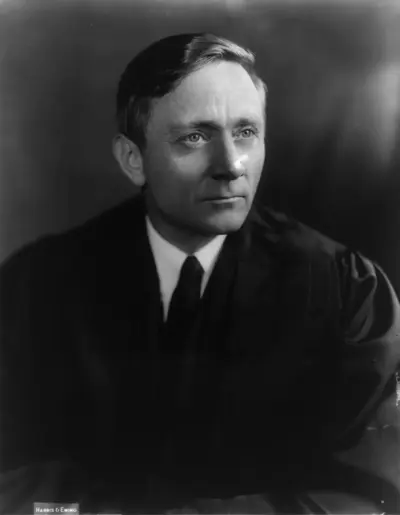
William Orville Douglas was an American jurist and politician who served as an associate justice of the Supreme Court of the United States. Nominated by President Franklin D. Roosevelt, Douglas was confirmed at the age of 40, one of the youngest justices appointed to the court. His term, lasting 36 years and 211 days (1939–75), is the longest in the history of the Supreme Court. In 1975, Time magazine called Douglas "the most doctrinaire and committed civil libertarian ever to sit on the court."
