DeWitt Clinton Quotes
A nation that derives its subsistence, principally from the forest, cannot live in the vicinity of one that relies upon the products of the field. The clearing of the country drives off the wild beasts; and when the game fails, the hunter must starve, change his occupation, or retire from the approach of cultivation.
Clinton was a founder of the society. In his view, and that of many others, this was the essential problem facing the Indians and whites in North America. It was also a problem between agricultural Indian tribes and those that were hunter-gatherers. The whites of the time were predominantly agriculturalists. The hunter gatherer requires much more land per person than does the farmer. Agriculture allowed progress and development, but at the same time, it curtailed and eventually ended hunter-gatherer cultures nearby. Over time, the latter either became agricultural communities or degenerated and/or disappeared.
DeWitt Clinton, 1769-1828, Vice President of the United States (NY), U. S. Senator (Anti-Federalist Republican, NY), Mayor of New York City, Governor of New York, Peace Party candidate for President of the United States, “Father of Free Public Schools", Speech to the New York Historical Society, December 6, 1811
Sourced by: Eigen's Political and Historical Quotations


Environmentalists counter with the fact that the corporate and government interests in growth at any cost will, and have in the past, found a loophole in every reasonable compromise that has been made. Reasonableness is only a device they use to slow regulation until they can either figure out a loophole or use their great fiscal resources to shape public thinking to soften or eliminate the regulation. Therefore some environments argue that they must be as ideological about the environment as the corporations are about their rights to profit and not compromise even when a compromise appears reasonable. Besides, if the corporations always appear to win, the public will think opposing them is futile. So when they can be beaten on something that is unreasonable, they appear weaker and encourage more environmental public activism.


This statement of the problem was so eloquent and universal that it is even used a century later. For example it was quoted by James Inhofe, on his Senate Speech, October 4, 2004.
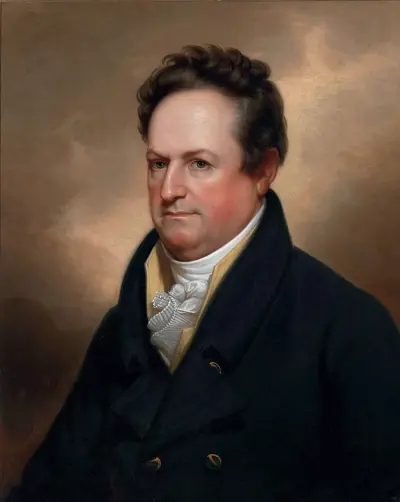
DeWitt Clinton, whose name was almost always spelled De Witt during his lifetime and until the late 20th century, was an American politician and naturalist. He served as a United States Senator, Mayor of New York City, and as the sixth Governor of New York. In this last capacity, he was largely responsible for the construction of the Erie Canal. Clinton was a major candidate for the American presidency in the election of 1812, challenging incumbent James Madison.
