Jawaharlal Nehru Quotes
A moment comes, which comes but rarely in history, when we step out from the old to the new; when an age ends; and when the soul of a nation long suppressed finds utterance.
Nehru, Jawaharlal. "A Tryst with Destiny." Constituent Assembly of India, 14 Aug. 1947, New Delhi. Constituent Assembly Debates (Proceedings), vol. 5, 1947, p. 4.


Honore Gabriel Victor Requiti

At the time, there were no major issues In contention for the nation, and bipartisanship became quite easy. That would change markedly in the following decades when the new questions came forward from reformers like Theodore Roosevelt and muckraking journalists. The new questions had to do with monopolies, trusts, corporate power, regulation, corruption and political machines.


In the negotiations the Indian nationalists of the Congress Party did not get everything that they wanted. Rarely does anyone in legitimate negotiations. This was a masterful example of oratory where Nehru wanted to produce the euphoria and historical gravitas that was appropriate when the largest group of people in world history gained self-government and independence. Yet the Congress Party had made promises in the platforms over the years that had not been kept. The partition of the one nation into a Muslim state as well as India denied the Indians of some of their historically and economically most important territories and he had to acknowledge that failure without dampening the public enthusiasm for the great achievement. This was a masterpiece.


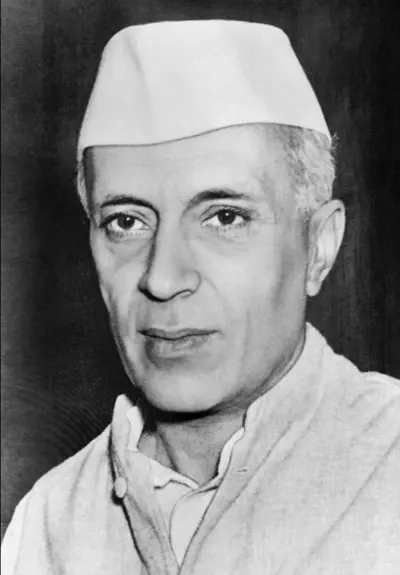
Jawaharlal Nehru was an Indian independence activist and, subsequently, the first Prime Minister of India, as well as a central figure in Indian politics both before and after independence. He emerged as an eminent leader of the Indian independence movement, serving India as Prime Minister from its establishment in 1947 as an independent nation, until his death in 1964. He was also known as Pandit Nehru due to his roots with the Kashmiri Pandit community, while Indian children knew him better as Chacha Nehru (Hindi: Uncle Nehru).
