Karl Manheim Quotes
A modern theory of knowledge which takes account of the relational as distinct from the merely relative character of all historical knowledge must start with the assumption that there are spheres of thought in which it is impossible to conceive of absolute truth existing independently of the values and position of the subject and unrelated to the social context.
Mannheim, Karl. Ideology and Utopia: An Introduction to the Sociology of Knowledge. Translated by Louis Wirth and Edward Shils, Harcourt, Brace and Company, 1936, p. 70.


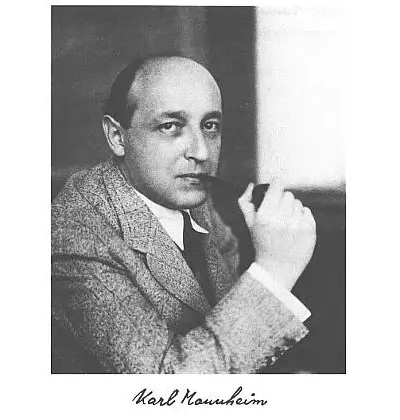
Karl Mannheim was an influential German sociologist during the first half of the 20th century. He is a key figure in classical sociology, as well as one of the founders of the sociology of knowledge. Mannheim is best known for his book Ideology and Utopia (1929/1936), in which he distinguishes between partial and total ideologies, the latter representing comprehensive worldviews distinctive to particular social groups, and also between ideologies that provide outdated support for existing social arrangements, and utopias, which look to the future and threaten to transform a society.
