Walter Lippmann Quotes
A long life in journalism convinced me many presidents ago that there should be a large air space between a journalist and the head of a state.
Walter Lippmann, 1889-1974, Political Columnist, Retirement Speech, Quoted in New York Times, May 26, 1967
Sourced by: Eigen's Political and Historical Quotations

He felt this was so important that it was worth being labeled “un-American” at various times.


In modern times, there have been many incidents of members of the press not supporting the current war effort. Sometimes, it is the greed to get a story, and other times, it is to advocate an alternate strategy. Most often it is a belief that in democracy, only a knowledgeable public can govern the government. The administration or general cannot be relied upon to provide accurate information. Many think The Vietnam War started this problem, but it has been ongoing ever since the Revolution. In the War of 1812, with many Americans dying fighting, other Americans were critiquing the war infuriating the military and the President. Similarly, in all other wars including the Civil War. The relationship between Grant and the Press was as vitriolic as that of the Vietnam War. The war where there was the least conflict between the military and the press was WWII where press were given total access to the front lines without the controls that developed later in the Iraq War.


Many scholars believe that complete objectivity is impossible psychologically. Hence, neutrality is a better standard and goal some argue.


For a corroberating quote see Quotation 644762


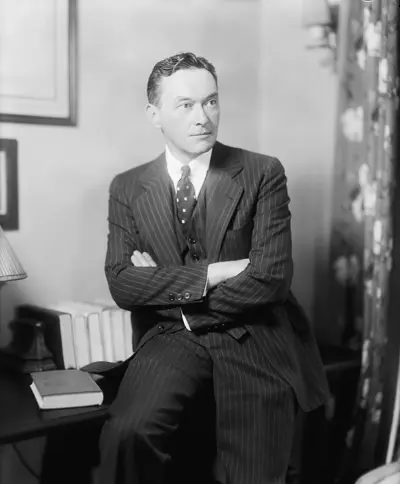
Walter Lippmann was an American writer, reporter and political commentator. With a career spanning 60 years he is famous for being among the first to introduce the concept of Cold War, coining the term "stereotype" in the modern psychological meaning, as well as critiquing media and democracy in his newspaper column and several books, most notably his 1922 book Public Opinion.
