Erwin Schrodinger Quotes
[A living organism] ... feeds upon negative entropy ... Thus the device by which an organism maintains itself stationary at a fairly high level of orderliness (= fairly low level of entropy) really consists in continually sucking orderliness from its environment.
Schrödinger, Erwin. What is Life? The Physical Aspect of the Living Cell. Cambridge University Press, 1944, p. 72.


Both the Freon used in air conditioners and the energy to run the air conditioning equipment (generated by fossil fuels) contribute to global warming. Therefore Cox observes that the more air conditioning we use the warmer the climate as a whole gets. And then we need more air conditioning to be comfortable. This in turn produces more warming and Cox argues were are in an endless cycle. However, while this is true, the incremental energy required to produce the additional cooling to offset the global warming is relatively small. What is the greater problem is if the billions of people who do not now have air conditioning want it and get it. That will require enormous additional energy which could produce substantially more global warming. It should be noted that the United States has already banned Freon in favor of coolants which do not attack the ozone layer. And if the energy for air conditioning were produced by clean energy—nuclear, thermal, wind, hydroelectric or solar, the whole problem is moot and there would be no problem with air conditioning. However, as long as we use fossil fuels, Cox’s point is well taken.


The “burn” referred to gasoline that is burned in automobiles.


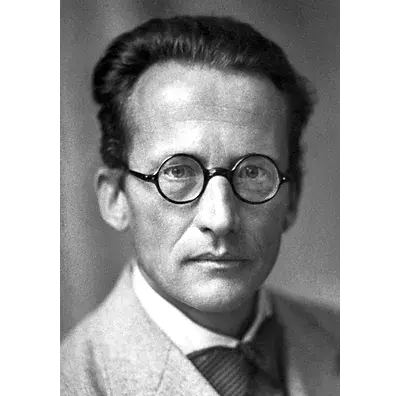
Erwin Rudolf Josef Alexander Schrödinger, sometimes written as Erwin Schrodinger or Erwin Schroedinger, was a Nobel Prize-winning Austrian-Irish physicist who developed a number of fundamental results in quantum theory: the Schrödinger equation provides a way to calculate the wave function of a system and how it changes dynamically in time.
