Fred Hoyle Quotes
A junkyard contains all the bits and pieces of a Boeing 747, dismembered and in disarray. A whirlwind happens to blow through the yard. What is the chance that after its passage a fully assembled 747, ready to fly, will be found standing there? So small as to be negligible, even if a tornado were to blow through enough junkyards to fill the whole Universe.
Hoyle, Fred. The Intelligent Universe. Michael Joseph, 1983, p. 19.


This quotation was from a mathematician who was in the midst of the expansion of mathematics in the late 19th century to include the then rapid and rich development of Probability. This required mathematicians, scientists and others who would use the new mathematics to think in a very different way. For the existing mathematicians his quote clearly states the dilemma for them. Today, scientists and mathematicians have little trouble with “laws of probability” and realize that Probability is governed and controlled in the same way as other fields of mathematics; they are comfortable with different results occurring under the exact same experimental conditions, and those different results are unpredictable in any particular instance, but exactly predictable in terms of frequency of each possible occurrence. This makes Quantum Mechanics rational. However, few non scientists have had their thinking expanded and are comfortable with this thinking. Law and public policy makers are particularly vexed by not being able to think and work in this paradigm where consequences of something can be described for a population precisely, and yet be impossible to describe for any particular individual. This will improve over time, as politicians and other community leaders become better educated mathematically and scientifically.


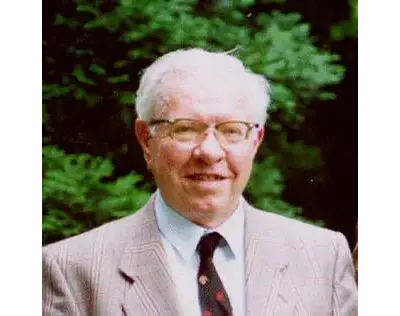
Sir Fred Hoyle FRS was an English astronomer who formulated the theory of stellar nucleosynthesis. He also held controversial stances on other scientific matters—in particular his rejection of the "Big Bang" theory, a term coined by him on BBC radio, and his promotion of panspermia as the origin of life on Earth. He also wrote science fiction novels, short stories and radio plays, and co-authored twelve books with his son, Geoffrey Hoyle. He spent most of his working life at the Institute of Astronomy at Cambridge and served as its director for six years. He was one of the authors of the influential B2FH paper.
