Hjalmar Branting Quotes
A formally recognized equality does, however, accord the smaller nations a position which they should be able to use increasingly in the interest of humanity as a whole and in the service of the ideal.
Branting, Hjalmar. "Fraternity Among Nations." Nobel Lectures, Peace 1901-1925, edited by Frederick W. Haberman, Elsevier Publishing Company, 1972, pp. 325-333.


Although, on sever occasions Mao tried to reach out to the United States, the fact that he was leading a communist movement and Chiang Kai-shek, our recognized ruler of China hated Mao caused his overtures to be rebuffed. American military leaders knew very little about China and our intelligence was almost non-existent. They assumed that he was under the control of Russia and Joseph Stalin when in fact, the Russians wanted to oust Mao for not following Stalin’s communist orthodoxy. They succeeded in firing him as head of the party and replacing him with a committee of more loyal communists. Not only did the US rebuff Mau’s outreach attempts, but American money and military material financed 6 different military campaigns by Chiang to exterminate Mao and his communists.
None succeeded as the vast majority of the peasants supported Mao and his troops and provided support and information in Chiang’s attempts. Some historians believe we “bet on the wrong horse”.

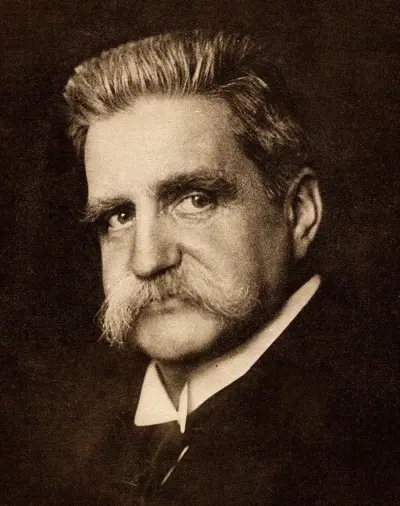
Karl Hjalmar Branting was a Swedish politician who was the leader of the Swedish Social Democratic Party (1907–1925) and Prime Minister during three separate periods (1920, 1921–1923 and 1924–1925). When Branting came to power in 1920, he was the first Social Democratic Prime Minister of Sweden. When taking office for a second term after the general election of 1921, he became the first socialist politician in Europe to do so following elections with universal suffrage. In 1921, Branting shared the Nobel Peace Prize with the Norwegian secretary-general of the Inter-Parliamentary Union Christian Lous Lange.
