Ralph E. Flanders Quotes
A [foreign] government is to be judged by what it does for people. It is to be assisted or combatted with reference to people, and is to be approached through those people.
Ralph E. Flanders, 1880-1970, U.S. Senator (Republican, VT), Autobiography
Sourced by: Eigen's Political and Historical Quotations

The Iraqi Prime Minister was a Shiite autocrat who had a winner take all approach to government and other than putting token Sunnis and Kurds in the Cabinet ran a very discriminatory government and could muster no loyalty with Kurds and Shiites.


The only soldier ever so honored. At the beginning of WWII, President Roosevelt and Churchill wanted the U. S. Army to invade German and Italian North Africa. Marshall, General Eisenhower, and all the other military men, advised that while it was possible, it would be a diversion from the strategic objective of invading Europe. None the less FDR ordered the invasion. The effect on the American people was wonderful, It showed that the Germans were not invincible, increased enlistment and morale at home, and developed more popular support for the war. Later, Marshall learned much about Democratic leadership and he, himself became a very effective government leader, and began to appreciate FDR’s approach but with a little cynicism about democracy.


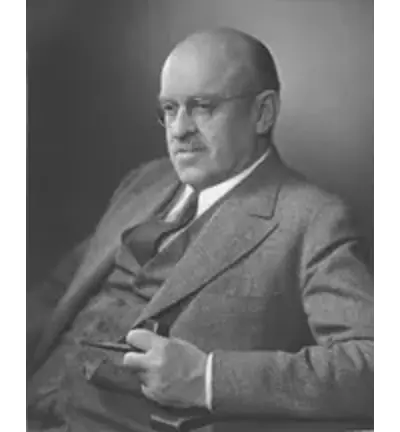
Ralph Edward Flanders was an American mechanical engineer, industrialist and politician who served as a Republican U.S. Senator from the state of Vermont. He grew up on subsistence farms in Vermont and Rhode Island and was an apprentice machinist and draftsman before training as a mechanical engineer. He spent five years in New York City as an editor for a machine tool magazine. After moving back to Vermont, he managed and then became president of a successful machine tool company. Flanders used his experience as an industrialist to advise state and national commissions in Vermont, New England and Washington, D.C. on industrial and economic policy. He was president of the Boston Federal Reserve Bank for two years before being elected U.S. Senator from Vermont.
