Samuel Freeman Miller Quotes
A considerable number of the prisoners fell even after a short confinement, into a semi-fatuous condition, from which it was next to impossible to arouse them, and others became violently insane; others, still, committed suicide, while those who stood the ordeal better were not generally reformed, and in most cases, did not recover sufficient mental activity to be of any subsequent service to the community.
This Pennsylvania prison was supposedly a “modern” reform in law enforcement. Rather than work gangs or mandatory factory work, this was the first “penitentiary” in America. The guilty convicts would be in a small cell for all but 1 hour or less a day, and the only thing in the cell other than soap and a toothbrush was a Bible. The convict was supposed to spend his sentence reading th Bible and being penitent for his crimes. It destroyed most inmates mentally until the Supreme Court Ruled total solitary confinement was unconstitutional. There are a fee high security prisons today where there is no social contact allowed the inmates and their constitutionality is being litigated based on Miller’s 1890 opinion. Another point that this quotation illustrates is that sometimes reform efforts produce a situation that was worse than before.
Samuel Freeman Miller, 1816-1890, U. S. Supreme Court Justice, Declaring Eastern State Penitentiary to be unconstitutional, 1890
Sourced by: Eigen's Political and Historical Quotations

On a tour of America, Dickens visited Eastern State Penitentiary, a Pennsylvania prison opened in 1829 which was supposedly a “modern” reform in law enforcement. Rather than work gangs or mandatory factory work and filthy living conditions, this was the first “penitentiary” in America. The guilty convicts would be in a small clean but bare cell for all but 1 hour or less a day, and the only thing in the cell other than soap and a toothbrush was a Bible. The convict was supposed to spend his entire sentence reading the Bible and being penitent for his crimes. It destroyed most inmates mentally until the Supreme Court ruled in 1890 that total solitary confinement was unconstitutional.

This is one of the earliest views that insane people should not be criminally punished for their acts. To a great extent, Constantine and his contemporaries believed that insanity was the work of the Devil or demons and therefore one should not sympathize with the condition either.


The sheriff was responsible for the Cook County Jail. At the time of the interview, Dart had 2500 mentally ill people in his job, making the Cook County Jail the largest insane asylum in the country. The worst part about that situation was that the jail is in no position to provide proper diagnosis and treatment for the mentally ill.


This is an amazingly intellectually advanced quotation. Herman Helcher, was a former pupil of hers who had become mentally deranged and tried to murder her and left her permanently injured. She not only argued against the jailing of a mentally ill person, but she recognized mental illness for what it is—a disease of the brain. This concept was not appreciated by most American politicians or constituents even into the 21st century.


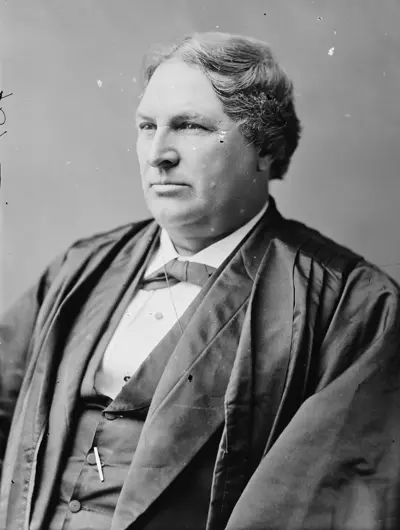
Samuel Freeman Miller was an associate justice of the United States Supreme Court who served from 1862 to 1890. He was a physician and lawyer.
